In this article
Few technology decisions shape a website as much as the choice of platform. For years, businesses faced a binary option: a traditional content management system such as WordPress, easy for marketing teams to update but sometimes limited in performance and design flexibility, or a custom-built front end that was fast and flexible but harder for non-technical staff to manage.
Headless WordPress with Next.js removes much of that compromise. It keeps WordPress for what it does best — managing content — and uses Next.js, a React-based framework, to deliver the website itself. The result can be a site that is both easy to edit and exceptionally fast. But the architecture is not right for every project, and understanding when it fits is what separates a good investment from unnecessary complexity.
How the architecture works
In a traditional WordPress website, the same system stores content and renders every page using a PHP theme. In a headless setup, those responsibilities are separated.
WordPress becomes the content hub. Editors continue to use the familiar dashboard to write pages, publish articles, manage media and update menus. Content is exposed through the WordPress REST API or a GraphQL layer such as WPGraphQL.
Next.js becomes the presentation layer. A separately built front end requests content from WordPress and turns it into pages. Next.js can pre-render pages at build time, regenerate them in the background when content changes, or render them on demand — choosing the right strategy for each type of page.
A global delivery network serves the site. Pre-rendered pages and assets are distributed through a content delivery network, so visitors in New York, London or Toronto receive pages from a location close to them.
The business benefits
Performance that is hard to match
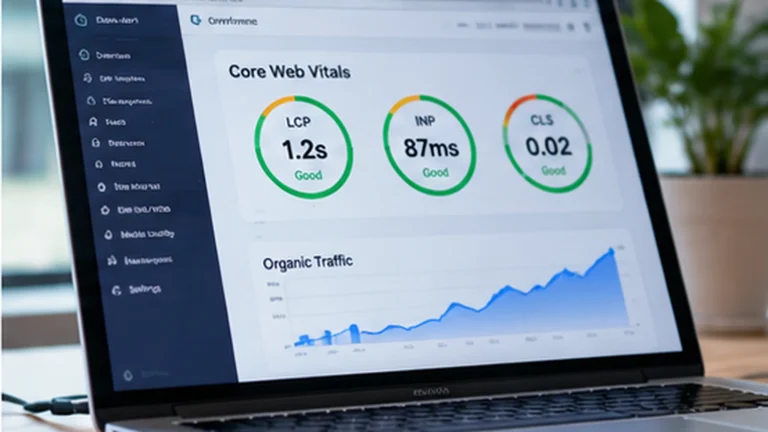
Because most pages are generated in advance and served from the edge of the network, there is little or no waiting for a server to assemble each page. Combined with built-in image optimisation, code splitting and modern font loading, headless sites can consistently achieve strong Core Web Vitals scores — which support both user experience and search visibility.
Design and interaction freedom
Front-end developers work with React components rather than theme templates. Rich interactions, product configurators, personalised experiences and app-like navigation become far easier to build and maintain.
Security by separation
The public website no longer exposes the WordPress admin or its plugins directly to visitors. The content system can sit behind additional protection, significantly reducing the surface available to common automated attacks.
One content source, many channels
The same WordPress content can power a website, a mobile app, a customer portal or digital signage. Content is created once and reused wherever it is needed.
Headless is not about abandoning WordPress. It is about letting WordPress manage content and letting a modern front end deliver experiences.
The trade-offs to consider
Higher initial investment. Two systems must be designed, built, hosted and connected. A headless project typically costs more than a well-built traditional WordPress site of similar scope.
Plugins that affect the front end need rebuilding. Many WordPress plugins — page builders, sliders, form builders and some SEO features — assume they control the theme. In a headless setup, their front-end functionality must be implemented in Next.js.
Preview and editing workflows require care. Editors expect to preview changes before publishing. This works well in headless setups, but it must be deliberately implemented rather than assumed.
Specialist skills. The stack requires expertise in both WordPress and modern JavaScript engineering, as well as in hosting and deployment pipelines.
When headless WordPress is the right choice
- Performance and conversion directly affect revenue, and every fraction of a second counts.
- Your brand experience requires custom interactions that themes struggle to deliver.
- You publish large volumes of content and want it reused across several channels.
- You have high traffic, international audiences or strict security requirements.
- Your marketing team relies on WordPress and does not want to learn a new content system.
For smaller business websites with standard requirements, a well-engineered traditional WordPress build — lightweight theme, careful plugin selection, caching and a content delivery network — often delivers excellent performance at a lower cost. The best architecture is the one that matches your goals, not the most fashionable one.
What a well-executed project includes
- Content modelling — structuring content types and fields in WordPress so they map cleanly to front-end components.
- A component library in Next.js that editors can combine flexibly without breaking the design.
- A rendering strategy for each page type: static, regenerated on update, or rendered on demand.
- Preview, search and forms implemented deliberately so editors and visitors lose nothing.
- SEO foundations — metadata, structured data, sitemaps and redirects handled in the front end.
- Automated deployment, so content updates and code changes reach production safely and quickly.
The bottom line
Headless WordPress with Next.js gives organisations the editing experience their teams already know and the speed and flexibility modern customers expect. Chosen for the right reasons and executed carefully, it is one of the most effective website architectures available today.
VNForge Labs builds both high-performance WordPress websites and headless platforms with Next.js. We will recommend the architecture that fits your goals and budget. Talk to our team.